Clear session closure
The experience included an intentional completion state, reinforcing the sense of a structured visit rather than an open-ended digital interaction.
Structured multi-step booking flow
Virtual pass as system bridge
Developed by XR Team
Key Design Decisions
The digital pass acted as both confirmation and access credential, linking booking, identity, and session entry in a single artifact.
System Design
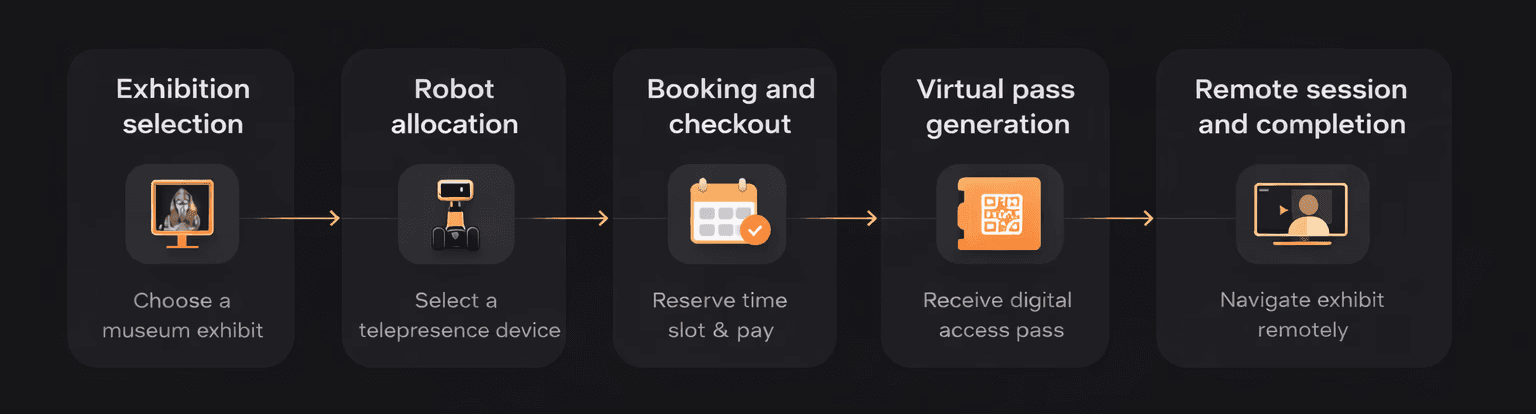
The experience was structured into five core stages:
Exhibition selection
Robot allocation
Booking and checkout
Virtual pass generation
Remote session and completion
Each stage was designed to communicate system state clearly, ensuring users understood where they were in the process and what would happen next. The telepresence robot was presented as a functional extension of the user within the museum environment.
2024
Telepresence Museum Experience
The Problem
Traditional museum visits are constrained by location, capacity, and time. Digital alternatives such as static virtual tours lack agency and real-time engagement. Visitors who are unable to attend in person, whether due to distance, scheduling, or accessibility limitations, have limited ways to meaningfully experience exhibitions.
The challenge was to design a system that:
preserves a sense of presence
supports structured booking and session management
integrates physical robotics with a digital interface
remains usable across a broad audience
Approach
The project was approached through a systems-thinking lens, focusing on relationships rather than individual data points. Instead of reducing complexity early, the goal was to preserve it while making it easier to reason about and explore.
The design process prioritised understanding how different energy sources, constraints, and outcomes interact, and how these relationships could be expressed through visual structure and interaction.
Outcome
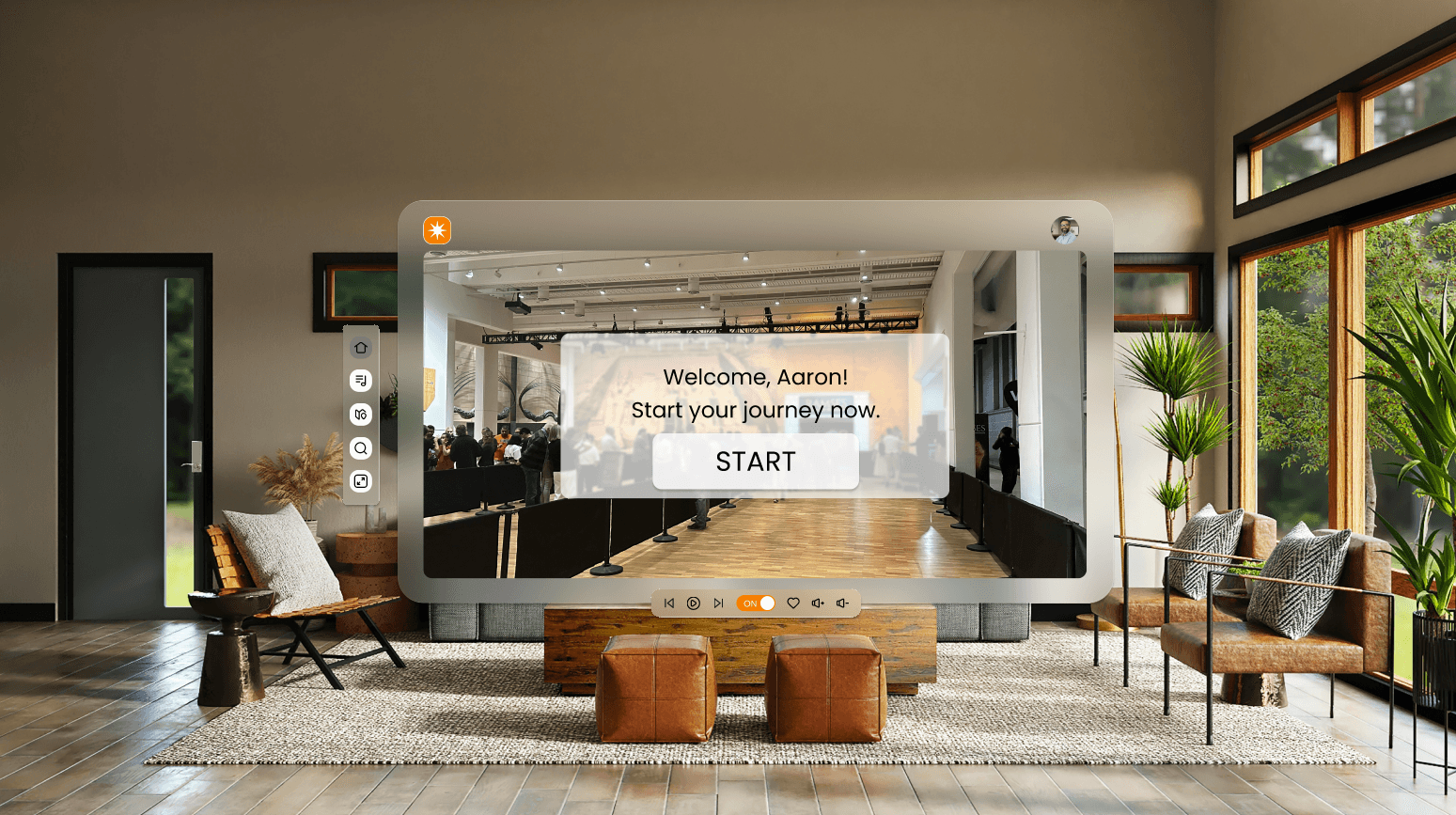
The result was a coherent, end-to-end telepresence service prototype that integrates physical robotics and digital interaction into a unified user journey. The system enables remote users to explore exhibitions in real time while maintaining structure, clarity, and accessibility.
Reflections
This project reinforced the importance of designing beyond isolated screens. Integrating hardware, service flow, and interface states required thinking at a systems level. It demonstrated how structured interaction design can make complex hybrid experiences understandable and usable.
My Role
I led the UX design of the end-to-end experience, defining the interaction model, service flow, and interface structure. The work involved mapping system states, designing multi-step booking flows, and ensuring the telepresence hardware was integrated clearly within the digital experience.
Context
Museums often face overcrowding, limited time slots, and accessibility constraints that restrict how visitors experience exhibitions. While digital archives exist, they rarely replicate the spatial and exploratory qualities of being physically present in a gallery.
This project explores telepresence as a way to extend museum access beyond physical attendance.
A remote, real-time platform enabling users to explore museum exhibitions through telepresence robotics.

Hardware integration clarity
Robot selection was treated as a primary decision point. Clear visuals and concise information ensured users understood the physical device they would control remotely.